Take action to mitigate Light Pollution
The problem of Light Pollution
Light pollution is a rapidly growing environmental problem that affects both the climate and nature in profound ways. Artificial light at night (ALAN) disrupts natural cycles that billions of living organisms, including humans, rely on to regulate behaviours like sleep, reproduction, and migration. Its consequences stretch far beyond obscuring the night sky for stargazers, compromising ecosystem function and the planet’s carbon balance.
Impact on Wildlife and Ecosystems
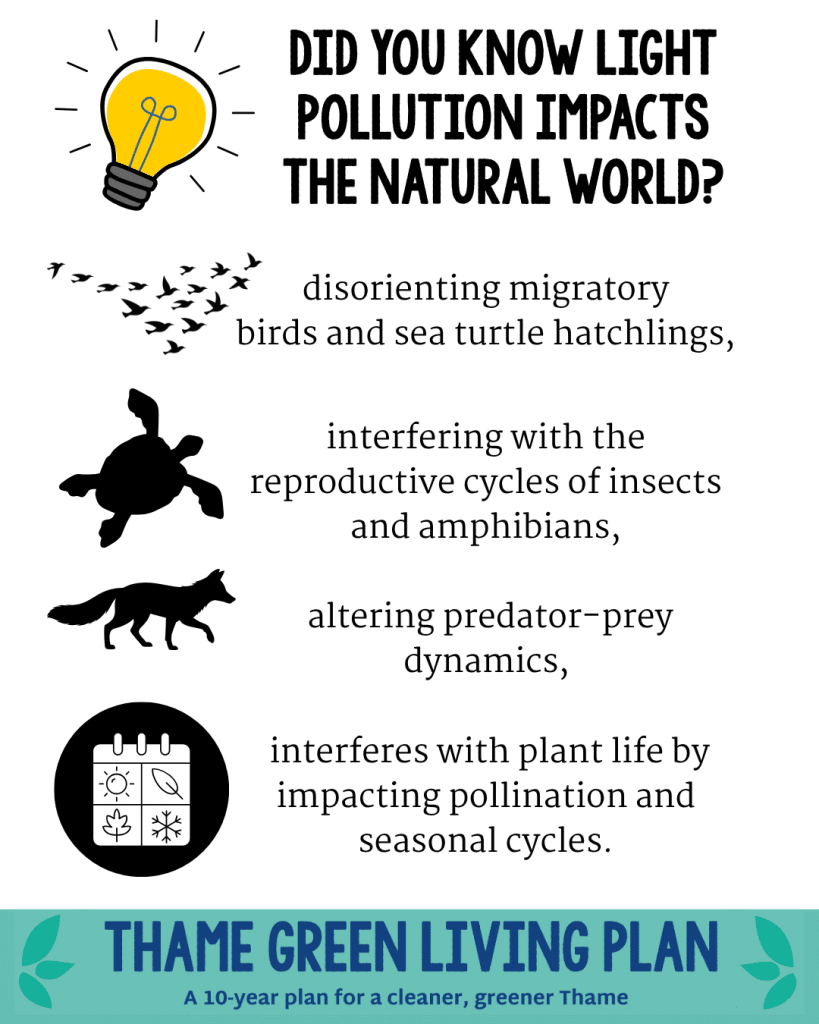
Many species, including amphibians, birds, mammals, and insects, are especially vulnerable to light pollution. Nocturnal animals experience altered environments where artificial lighting interrupts their hunting, breeding, and foraging activities. For example, frogs and toads may struggle to reproduce, and migratory birds often become disoriented, leading to fatal collisions with brightly lit structures and missed nesting periods. Insects, vital to food webs, are drawn to artificial lights, disrupting their mating rituals and increasing mortality rates, which undermines entire ecosystems that depend on them for nourishment.
Effects on Climate and Energy
Light pollution also affects the climate in two important ways. First, artificial lighting increases ecosystem respiration, causing plants, microbes, and animals to release more carbon dioxide at night, without a matching rise in photosynthetic carbon absorption. This shift reduces the ability of ecosystems to store carbon and can subtly but significantly alter the global carbon balance. Second, over-illumination wastes enormous amounts of energy, contributing needlessly to greenhouse gas emissions and driving climate change. Artificial lights interfere with atmospheric night-time cleansing mechanisms, meaning airborne pollutants linger longer, potentially deteriorating air quality.
Urgent Need for Regulation
As light pollution advances, more than two-thirds of key biodiversity areas are exposed, threatening both environmental and social wellbeing. Its impacts mirror those of other major pollutants, highlighting the need for urgent regulations, such as lighting curfews, stricter assessments for new installations, and shielding practices to mitigate harmful effects.
Overall, light pollution is a silent yet significant factor that impairs both climate processes and the delicate balance of nature, urging global action for harmonious coexistence with natural darkness.

5 things you can do about it
Here are five effective actions you can take at home to help mitigate light pollution:
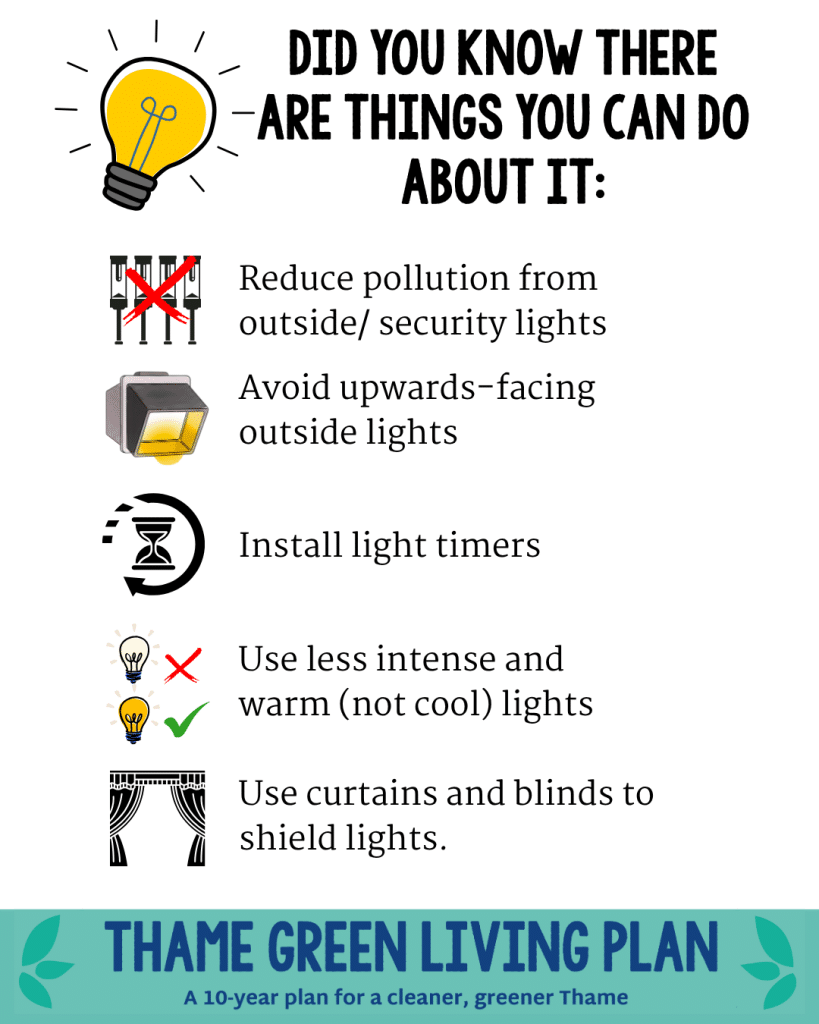
- Use Lighting Only When Necessary: Turn off lights when they are not needed and avoid using outdoor lighting unless absolutely required for safety or security. This simple habit reduces unnecessary light escaping into the night environment.
- Install Motion Sensors and Timers: Attach motion sensors or timers to your outdoor lights so they are only on when needed, minimizing constant illumination. Motion or timer controls prevent dusk-to-dawn lighting that is often wasteful and disruptive.
- Use Warmer and Dimmer Lights: Choose bulbs with a warm colour temperature (2,700 Kelvin or lower), which are less disruptive to wildlife and create less sky glow. Install dimmer switches to reduce overall brightness and light intensity in both indoor and outdoor lights.
- Shield and Direct Outdoor Lights Downwards: Fit outdoor lights with proper shielding so they direct light downward and prevent it from spilling upwards or sideways. Use enclosed fixtures or “full cut-off” fittings to focus illumination only where it is needed.
- Prevent Indoor Light from Escaping Outside: Close curtains or blinds after dark to stop indoor lighting from leaking outside and contributing to sky glow. If possible, move bright indoor lights away from windows and use task lighting instead of overhead lights at night.
Taking these steps helps protect nocturnal wildlife and preserves the beauty of the night sky for everyone.